
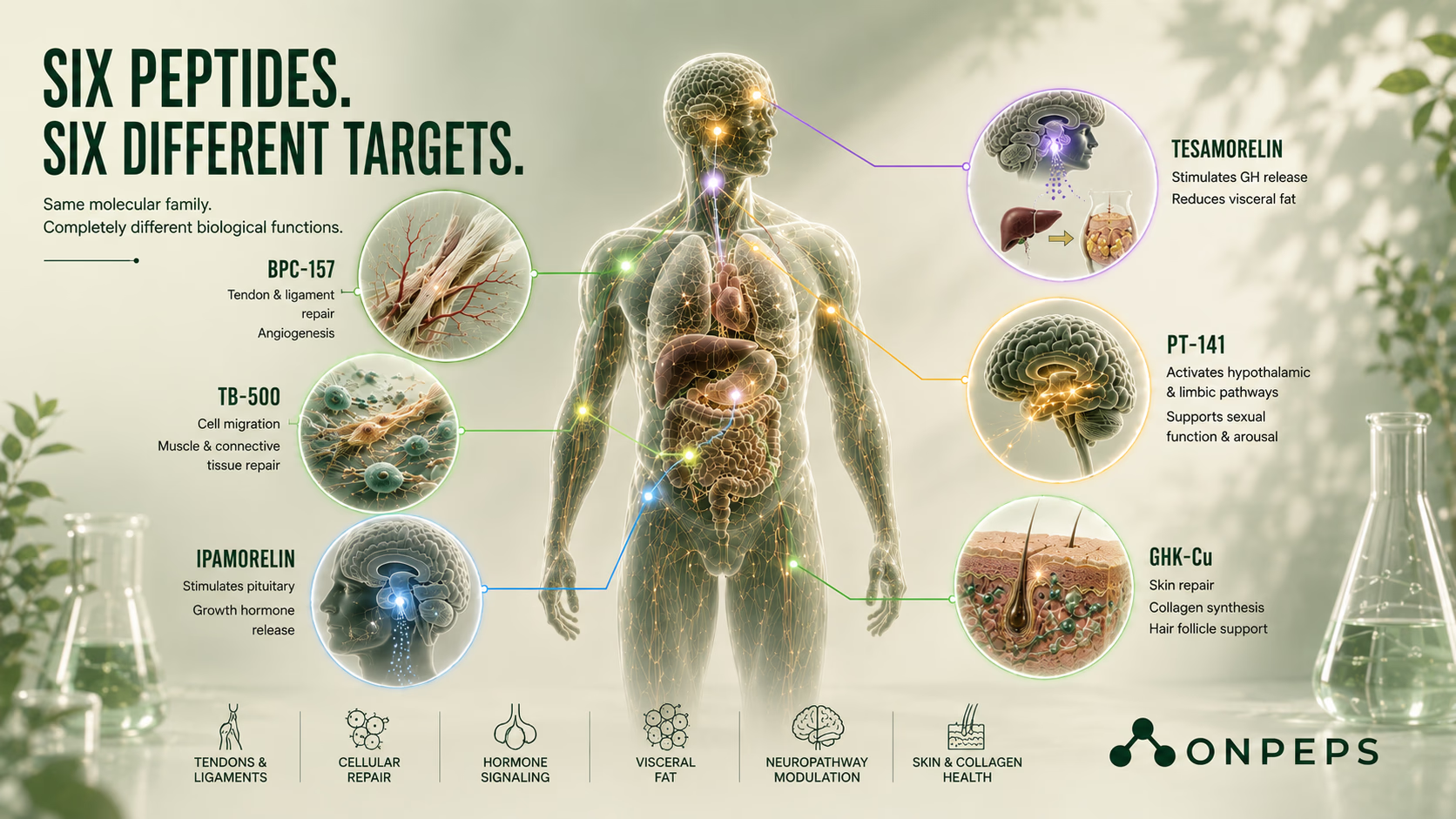
BPC-157 (Body Protection Compound-157) is often called the “Wolverine peptide” online. It is a synthetic pentadecapeptide made of 15 amino acids, derived from a protein found in human gastric juice. In drug research, it is classified as a cytoprotective agent.
Pleiotropic effects in animal studies
Preclinical studies show that BPC-157 influences angiogenesis, nitric oxide signaling, and growth factor activity across multiple tissue systems, including tendons, ligaments, muscles, and the gut. A 2025 systematic review in Orthopaedic Sports Medicine reviewed all studies on BPC-157 and musculoskeletal injury recovery. The authors concluded that the peptide shows promise in animal models involving tendon, ligament, muscle, and connective tissue healing.
A 2025 literature and patent review in Pharmaceuticals reached a similar conclusion: BPC-157 shows pleiotropic beneficial effects in multiple preclinical models, with relatively few side effects.
The human evidence gap
However, the compound has not been approved by the FDA or equivalent international regulators for human use. As of early 2026, all published BPC-157 trials include fewer than 30 subjects, and none used a placebo-controlled design.
The gap between compelling preclinical results and the lack of clinical studies is not evidence of failure. It simply shows that the research has not yet reached human validation.
FDA review progress
BPC-157 is currently under review by the FDA Pharmacy Compounding Advisory Committee, with a hearing scheduled for July 2026. This hearing will formally decide whether BPC-157 and other Category 2 peptides can be legally produced by 503A compounding pharmacies, or whether they will remain strictly prohibited.
Why production standards matter
Because BPC-157 is not approved, most products come from unregulated online suppliers. Purity, contamination, and dosing accuracy cannot be reliably guaranteed. Lack of regulatory oversight in production standards may create adverse event risks. Choosing reputable channels and requesting third-party testing is a basic risk-reduction step.
Conclusion
The value of BPC-157 is not in being mythologized, but in offering a window into the relationship between tissue repair and systemic signaling. Understanding its mechanism, evidence boundaries, and potential risks matters more than chasing a single effect.