
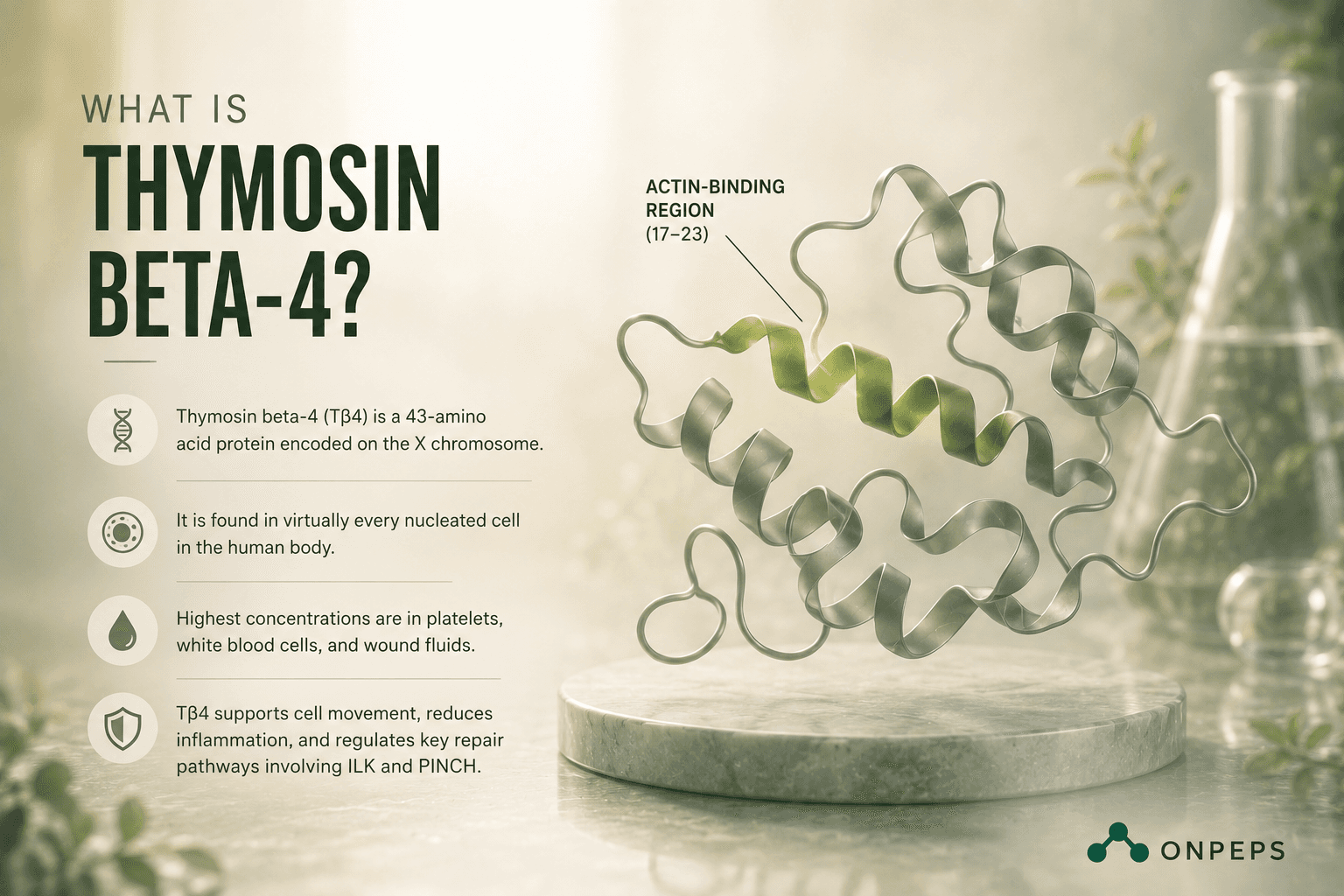
Thymosin beta-4 (Tβ4) is a 43-amino-acid protein. It is encoded on the X chromosome, meaning the gene responsible for telling cells to make thymosin beta-4 is located on the X chromosome. Cells read that gene and produce the Tβ4 protein.
It is found throughout the body
It can be found in virtually every nucleated cell in the human body. A nucleated cell is simply a cell that contains a nucleus. It stores the DNA, which contains the instructions for making proteins.
The highest concentration of thymosin beta-4 can be found in platelets, white blood cells, and wound fluids. Tβ4 was first isolated from thymic tissue in 1966, though its actin-binding role wasn’t fully characterized until decades later.
Multiple functional regions
The protein has several functional regions across its 43-amino-acid structure:
Central actin-binding region (positions 17–23): helps cells move.
Other parts: help reduce inflammation, interact with proteins that support surrounding tissues, and regulate important repair pathways involving ILK and PINCH.
What are ILK and PINCH?
ILK is a protein that helps cells sense and respond to their surroundings. It sits where cells attach to the extracellular matrix and acts as a signaling hub. Studies on Tβ4 suggest that it can activate ILK, which then helps cells move toward damaged tissue, promotes cell survival after injury, supports the formation of new blood vessels, and helps switch on repair cells that help heal the heart.
PINCH is an adaptor protein that binds to ILK and parvin to form the ILK-PINCH-parvin (IPP) complex. This complex helps connect cells to the extracellular matrix, stabilize the cell’s internal skeleton, coordinate cell movement, and promote cell survival during tissue repair.
Why this matters
All of these combined together give Tβ4 a bigger range of biological functions than any single peptide fragment can replicate. TB-500 contains only one small part of the full Tβ4 protein, so it may not reproduce all of the biological effects seen with full-length Tβ4.
Conclusion
Thymosin beta-4 is a functionally rich full-length protein whose biological complexity is far beyond what a 7-amino-acid fragment can fully replicate.