
BPC-157 and Gut Integrity: Can It Really Repair "Leaky Gut"?
Key Points
Animal studies suggest BPC-157 may strengthen the gut's physical barrier.
It appears to act as a cellular adhesive, tightening the tiny gaps between intestinal cells.
"Leaky gut" is usually controlled by specific proteins in the body, but BPC-157's mechanism does not appear to work by changing these control proteins.
Human evidence remains limited, and BPC-157 is still an unapproved experimental compound.
1. What Is Gut Integrity?
The intestinal lining is a protective barrier. It allows nutrients to enter the bloodstream while blocking harmful particles, bacteria, and toxins from leaking through.
When this barrier is damaged, incompletely digested food particles and bacteria may enter the bloodstream, triggering inflammation and immune responses. This phenomenon is commonly called "leaky gut."
2. BPC-157 and Tight Junction Proteins
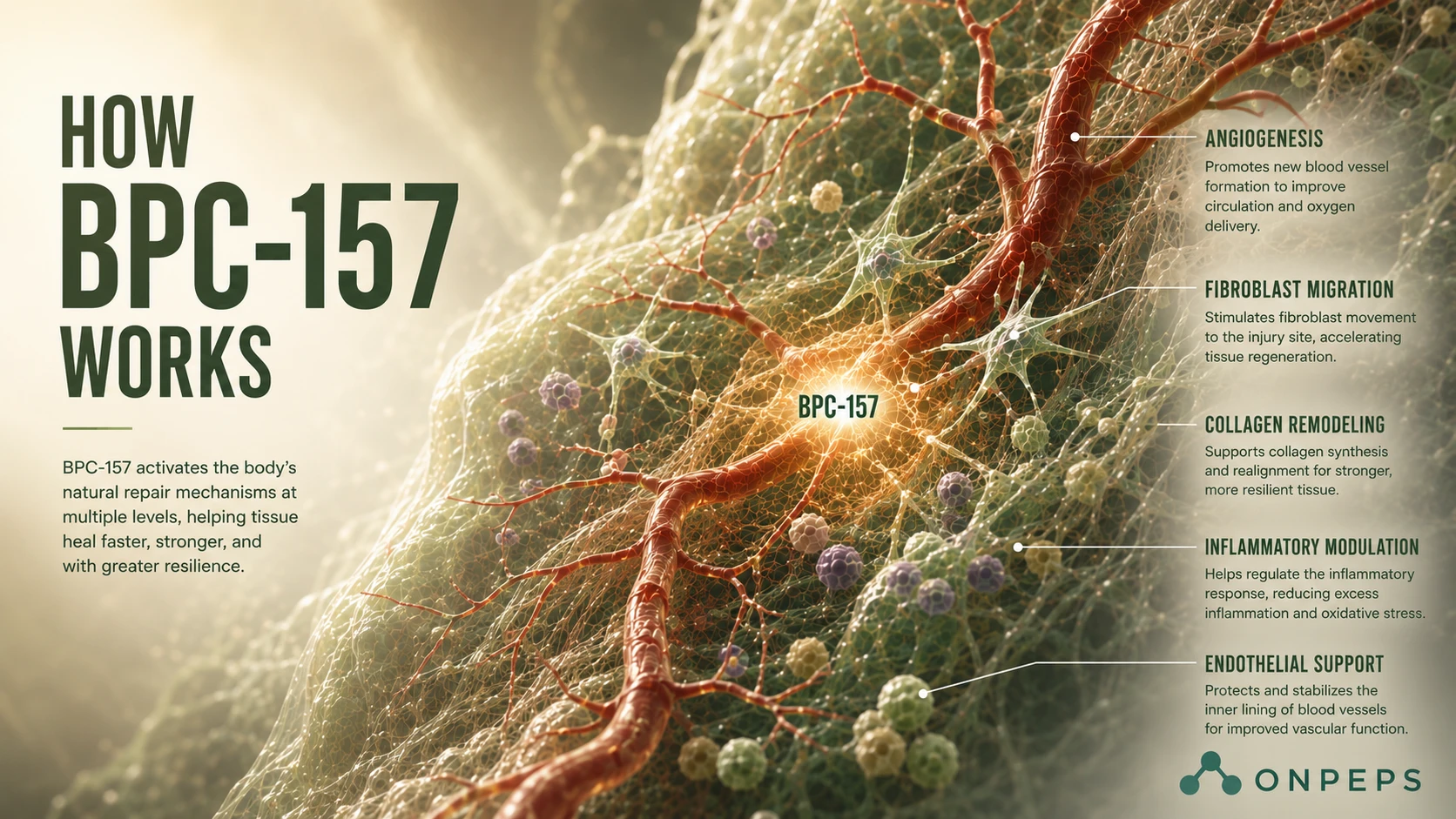
Animal studies suggest that BPC-157 can strengthen the gut's physical barrier. It appears to act as a cellular adhesive, tightening the tiny gaps between intestinal cells and preventing harmful particles from leaking through.
Although this helps explain its use in animal models for treating "leaky gut," these exact structural repair effects have not been confirmed in humans.
3. BPC-157, Zonulin, and "Leaky Gut"
"Leaky gut" refers to the breakdown of the protective barrier in the intestinal lining, a process usually controlled by specific proteins in the body.
Although BPC-157 is popular for its gut-repairing effects, research suggests its mechanism does not work by changing these control proteins, but by directly repairing and strengthening the intestinal tissue itself.
Exactly how it achieves this sealing effect is still being studied.
4. Gut Improvements in User Reports
In 53 user reports, gastrointestinal-related reports showed gradually emerging effects. Few users described "overnight recovery."
Most reports included the following:
Reduced irritation
Improved digestive stability
Reduced bloating
Reduced inflammatory discomfort
Improved food tolerance
Less gastrointestinal fluctuation during stress
Users 8, 35, 41, and 52 all reported varying degrees of gut improvement, including reduced bloating, less gastric irritation, improved digestion, and reduced inflammatory discomfort.
But it is important to note that these are self-reports, not results from controlled studies.
5. Why We Should Not Jump to Conclusions
Gut-related case reports contain more variables, such as:
Dietary changes
Reduced alcohol consumption
Reduced stress
Adjusted training intensity
Improved sleep
Concurrent supplement use
Probiotic use
Anti-inflammatory dietary interventions
For this reason, when it comes to gastrointestinal outcomes, it is difficult to attribute the effects to BPC-157 use itself.
6. Summary
BPC-157 has shown potential in animal studies to strengthen the gut barrier and repair intestinal tissue. It may work by directly repairing and strengthening the intestinal tissue itself, rather than by changing control proteins such as Zonulin.
But it must be emphasized: human evidence remains limited, and BPC-157 is still an unapproved experimental compound.
Understanding its potential role in gut integrity helps provide a more rational view of the "leaky gut repair" claim.
Frequently Asked Questions
Can BPC-157 affect tight junction proteins and gut barrier integrity?
Animal studies suggest that BPC-157 can strengthen the gut's physical barrier. It appears to act as a cellular adhesive, tightening the tiny gaps between intestinal cells and preventing harmful particles from leaking through. Although this helps explain its use in animal models for treating "leaky gut," these exact structural repair effects have not been confirmed in humans.
What is the relationship between BPC-157, Zonulin, and "leaky gut"?
"Leaky gut" refers to the breakdown of the protective barrier in the intestinal lining, a process usually controlled by specific proteins in the body. Although BPC-157 is popular for its gut-repairing effects, research suggests its mechanism does not work by changing these control proteins, but by directly repairing and strengthening the intestinal tissue itself. Exactly how it achieves this sealing effect is still being studied.
How long does it take for BPC-157 to improve gut health?
User reports suggest effects typically emerge gradually and may take weeks, rather than happening overnight.
Is there research supporting these gut improvements?
Currently, mainly animal research. Human studies are few and small, so this cannot be regarded as clinical fact.