
In recent years, Tirzepatide has become an unavoidable name in discussions about "weight loss injections" on social platforms. It has indeed helped many people lose weight, with visible results. However, weight loss is only the surface—its real strength lies in restoring the body's internal metabolic function.
Tirzepatide was not originally developed for cosmetic weight loss, but for the treatment of type 2 diabetes, obesity, and metabolic syndrome. It acts like an internal "smart manager" that recalibrates the switches that control blood sugar and hunger.
How does it work?
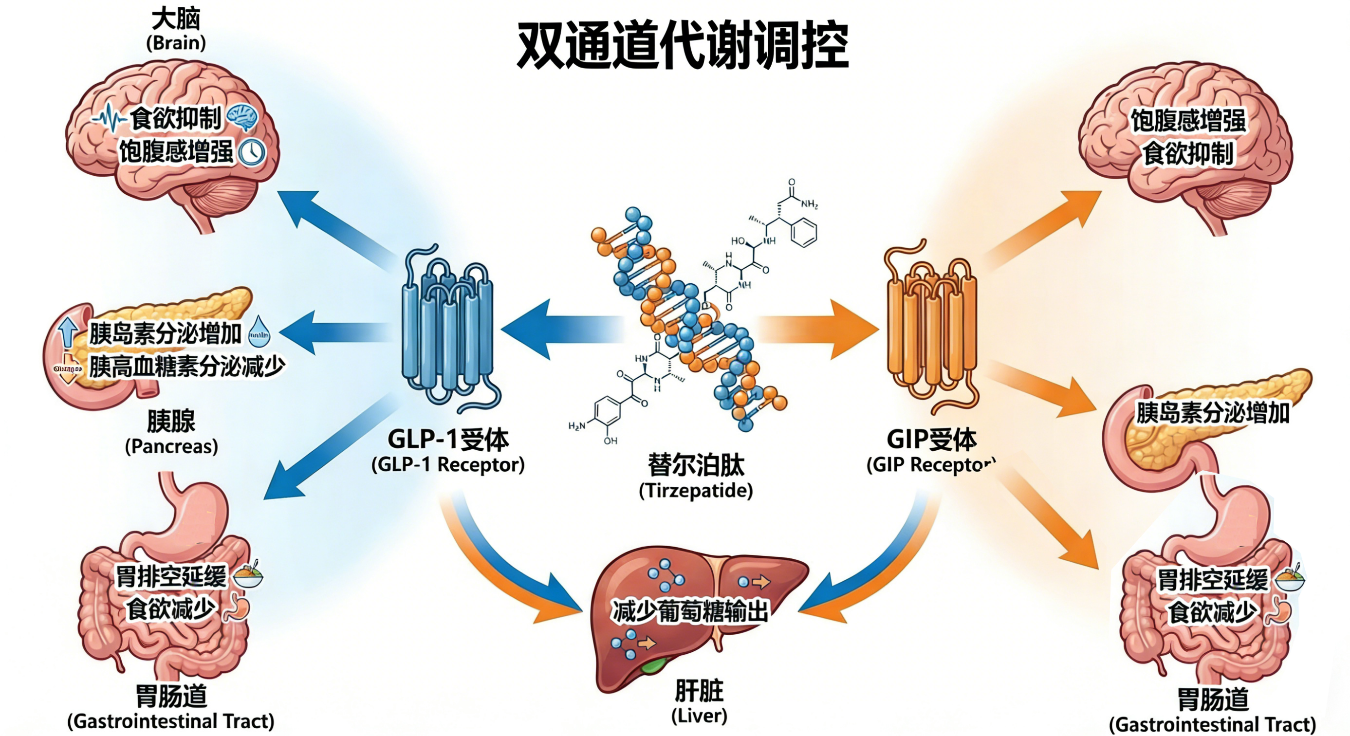
What makes Tirzepatide unique is its ability to simultaneously activate GLP-1 (Glucagon-Like Peptide-1) and GIP (Glucose-dependent Insulinotropic Polypeptide) —two hormones secreted by the gut—to regulate blood sugar and lipid metabolism after meals, while also sending signals to the pancreas, liver, gastrointestinal tract, and brain.
Specifically, it accomplishes four key things:
01 Acts on pancreatic β-cells
Only when blood sugar rises after a large meal does it stimulate the pancreas to release insulin. When blood sugar is normal, it stays inactive—significantly reducing the risk of hypoglycemia commonly associated with traditional diabetes medications.
02 Acts on pancreatic α-cells
It inhibits the release of glucagon, thereby reducing glucose output from the liver into the bloodstream.
03 Acts on the central nervous system
It directly signals the brain's hunger center: "That's enough, you're full. Stop thinking about food."
04 Acts on the gastrointestinal tract, delaying gastric emptying
It keeps food in the stomach longer, prolonging post-meal satiety, so you naturally eat less at the next meal.
More than just weight loss: reducing the body's overall burden
A global clinical study involving 15,000 patients has confirmed that the benefits of Tirzepatide go far beyond a smaller number on the scale. More importantly, it simultaneously brings blood sugar, blood lipids, and blood pressure back to healthy levels while promoting weight loss.
How to inject and store?
The initial dose is 2.5 mg per week for 4 weeks to allow the body to adapt. After that, the doctor may adjust the dose to between 5–15 mg per week. Injection sites include the abdomen, thigh, or upper arm, and should be rotated each time. Unopened pens should be stored in the refrigerator. After first use, the pen can be kept at room temperature for a maximum of 21 days.
Drug interactions to watch out for
Because it slows gastric emptying, if you are also taking oral contraceptives, thyroid medications (e.g., Levothyroxine), or certain antibiotics, it is best to wait at least 1 hour after injection before taking these medications. Additionally, do not mix with other GLP-1 or GIP receptor agonists (drugs with names ending in "-glutide" or "tide"), as this may worsen side effects.
Who should absolutely NOT use it?
Pregnant and breastfeeding women are strictly prohibited from using it. It is also contraindicated for individuals with a personal or family history of medullary thyroid carcinoma, previous acute pancreatitis, Multiple Endocrine Neoplasia syndrome type 2 (MEN-2), as well as anyone under 18 years of age.
What to do if you experience discomfort after injection?
Most people experience gastrointestinal reactions in the early stages, such as nausea and diarrhea. Here are some ways to manage them:
Strictly follow the initial low-dose regimen—do not rush to increase the dose.
Eat light meals for the first two days after injection, avoiding greasy and spicy foods.
Stay well-hydrated to prevent dehydration.
If you experience persistent severe abdominal pain, sudden hoarseness, or detect a lump in your neck, stop the medication immediately and consult a doctor as soon as possible.
About discontinuing the medication
Weight regain after stopping the drug is normal. After discontinuation, the body's metabolic state has not yet adjusted, and without proper diet and lifestyle management, weight can easily bounce back. Discontinuation should always be done under a doctor's guidance, with a gradual dose reduction. It is recommended to complete at least 6 months of continuous treatment before considering discontinuation. After stopping, it is even more important to stay disciplined and undergo regular check-ups every 3 to 6 months.
The drug is a booster; lifestyle is the foundation
Tirzepatide can help bring your deranged metabolism back on track. But for long-term health without rebound, the cornerstone of good eating and regular exercise must never be abandoned.
Diet: Prioritize fish, shrimp, tofu, leafy greens, and whole grains. Limit refined white rice and sugary drinks.
Exercise: Aim for at least 150 minutes of brisk walking or jogging per week, combined with two strength-training sessions (e.g., squats, light dumbbells) to prevent muscle loss. Avoid intense exercise on an empty stomach.
Mental health and sleep: Maintain a regular sleep schedule and emotional stability.
Studies show that combining the drug with healthy lifestyle habits can boost weight loss outcomes by an additional 20–30%.
Medication is just a tool to assist with regulation; a healthy lifestyle is the only sustainable path. Scientific medication, regular routines, and self-discipline are the keys to achieving lasting health and an ideal body.